


Sleep Tips for Babies, Toddlers & Kids


How to Stop the “One More…” Bedtime Battle Before It Starts
If your child’s bedtime routine ends only for them to suddenly need one more sip of water, one more hug, one more trip to the potty, one more question…
Before you assume they’re just stalling, ask yourself: could I anticipate some of these needs before I expect them to stay in bed?
That’s where I’d start.
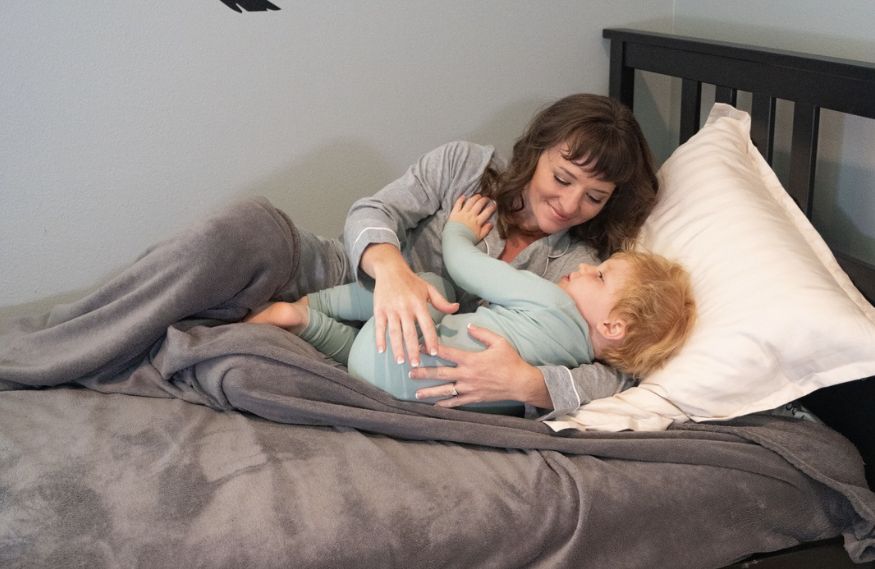
Anticipate their needs before you hold the boundary
Before lights out, think through the requests your child makes most often.
If they always ask for water, build a final sip into the routine. If they need to use the potty five minutes after you leave, make one last potty trip part of bedtime. If it’s always “one more hug,” don’t rush through connection and then spend the next 20 minutes trying to hold a boundary around connection. Build that last big hug, cuddle, or moment together into the routine intentionally.
You aren’t trying to predict every possible request your preschooler could invent. You’re communicating: we’ve taken care of everything you need, now it’s time for sleep. That makes the boundary that comes next much clearer, for both of you.
Then hold the boundary
Once you’ve anticipated those needs and completed the bedtime routine, you don’t have to keep reopening it. This is where consistency matters.
If bedtime sometimes ends after the routine, sometimes includes another snack, sometimes becomes three more hugs, and sometimes turns into 20 minutes of negotiating, your child doesn’t actually know where bedtime ends. And preschoolers are very good at investigating that question. The American Academy of Pediatrics makes the same point about discipline generally: children feel more secure, not less, when the response to their behavior is predictable.

A clear boundary doesn’t have to be harsh. You can be warm, responsive, and reassuring without changing the answer. In fact, predictability can make bedtime feel safer: your child learns what happens, what they can expect from you, and where the boundary stays.
When a ticket system tends to work well
- Your child already has needs anticipated and folded into the routine itself
- Bedtime stalling shows up as repeated small requests rather than one big protest
- Your child is old enough to understand a simple “you have this many left” concept, typically preschool age and up
- You’re consistent enough to hold the line once the tickets are gone, every night, not just some nights
When I’d hold off, or look elsewhere first
- Bedtime is currently wrapped up in a bigger disruption: illness, a recent move, a new sibling, or another major transition
- Your child needs you physically present to fall asleep at all, that’s a sleep association to address first, not a ticket problem
- Naps or wake time are clearly off, and bedtime resistance is really a symptom of a schedule that isn’t creating enough sleep pressure yet. Sleep Foundation’s guide to healthy sleep habits for kids is a good plain-language starting point if you’re not sure whether that’s what’s going on.
- You’re hoping the ticket itself will fix a deeper sleep problem rather than just the bedtime negotiating around it
What about a bedtime ticket?
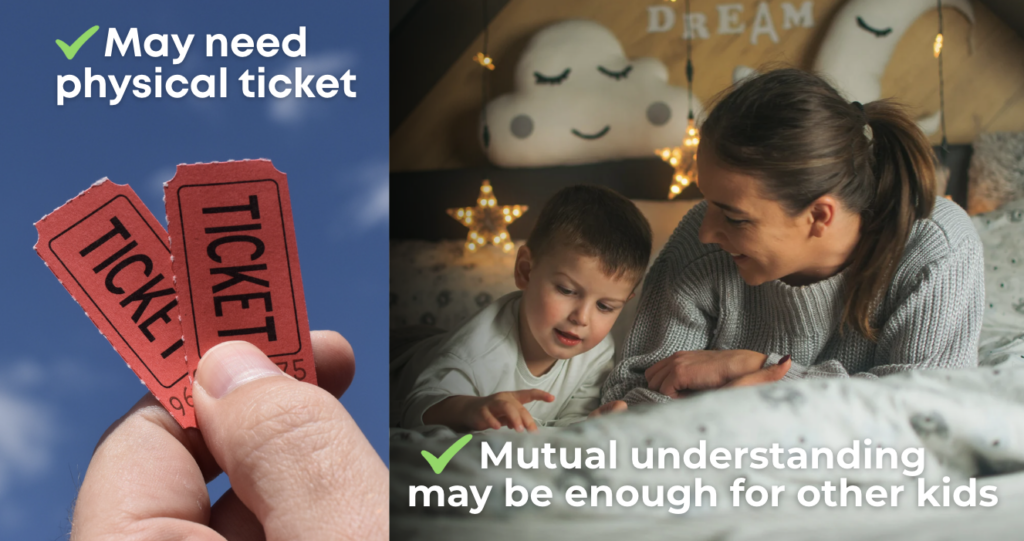
For some children, one bedtime ticket or pass can be a useful tool, but I’d use it after you’ve addressed the predictable needs, not instead of addressing them.
Your child gets one pass after bedtime. Maybe they use it for one extra hug. Maybe it’s their potty pass. You can decide what makes sense for your child and what you’re comfortable allowing.
The important part isn’t the physical ticket, though the kiddos like them. It’s that you’ve made the boundary concrete: there is one more opportunity, not an unlimited series of “one mores.” For some preschoolers, having that little bit of control can make it easier to accept the larger bedtime boundary. And for others, you may not need a ticket at all.
Don’t confuse warmth with moving the boundary
This is the part I especially want parents who are worried about crying or protest to hear: holding a bedtime boundary does not require withdrawing comfort.
Your child may be unhappy that bedtime is over. They may ask again. They may protest. You can acknowledge that, stay calm, offer appropriate reassurance, and still keep bedtime from starting over. The goal isn’t to convince your child to agree that bedtime should be over. The goal is to make bedtime predictable enough that they no longer need to keep testing where it ends.
If the “one more” requests aren’t actually the problem
Sometimes bedtime stalling isn’t primarily a boundary problem.
A child who consistently takes a long time to fall asleep may have a schedule that isn’t creating enough sleep pressure at bedtime. A child who’s exhausted and dysregulated by bedtime may have a different timing problem. And a child who relies on a parent’s presence to fall asleep may be asking for “one more” as part of a larger sleep association.
That’s why I don’t love treating bedtime tickets, or any single strategy, as the fix for bedtime battles. The behavior you see at bedtime is one piece of the sleep picture. If bedtime is one part of a larger struggle with falling asleep, night wakings, early mornings, or naps, that’s when I’d look beyond the bedtime boundary and assess the whole picture.
If sleep is still unraveling, let’s figure out why
At Sleep Well Children, I create individualized, science-backed sleep plans that consider your whole child and your whole family, so you aren’t stuck guessing which thing to change next. You’ll find more free guides on my resource library, or email me directly at hello@sleepwellchildren.com to talk through what’s actually going on at bedtime.
Schedule a free evaluation call here.

Sleep Science

Client Spotlight

Baby Sleep Tips
Explore The Blog

Toddler Sleep Tips

